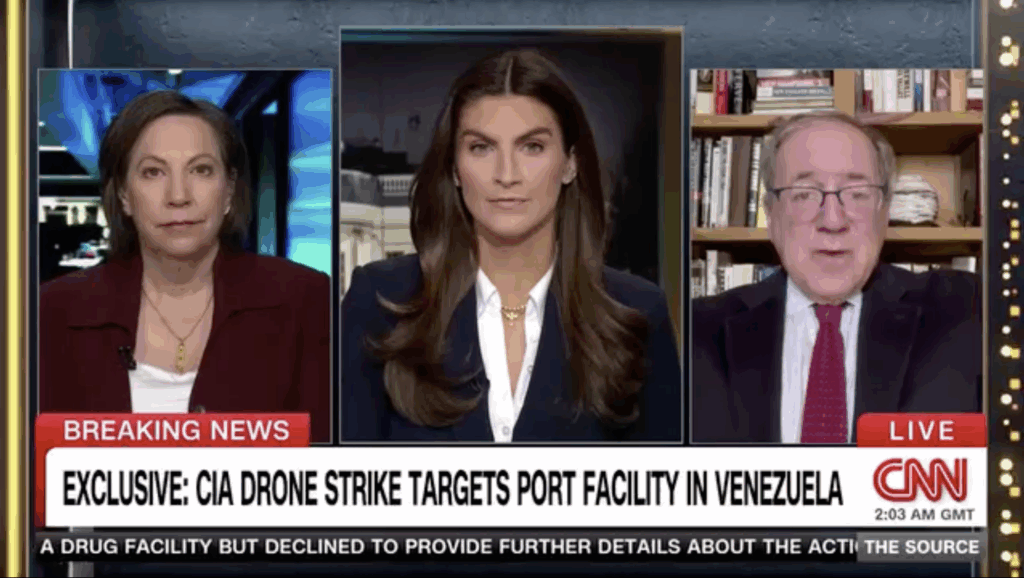
We are not even halfway through the first month of the New Year, and there is more going on geopolitically than ever. Here is my take from last night on Iran with Kaitlan Collins and Congresswoman Yassamin Ansari on CNN.
The President and his team are meeting today (Tuesday) at the White House to decide how to respond to the Islamic Republic regime’s brutal repression of its people. The options include diplomacy, covert action, a range of military options, or a combination of these. Unlike the first Trump Administration, our partners in the region (Gulf states and Israel) oppose U.S. military strikes on Iran, at least at this juncture, fearing Iranian retaliation.
Formulating U.S. policy is not easy. The considerations that must be weighed include:
- The reputational/deterrence risk of not doing enough to back protesters being murdered by the regime and to back up Pres. Trump’s public warning that the U.S. is “locked and loaded” and will respond militarily if the regime kills protesters (that red line has been crossed);
- The risk of Iranian retaliation or a pre-emptive strike against Israel and Gulf partners when the US now lacks the aircraft carrier and other assets that were essential in providing air defenses last year, many of these assets are now in the Caribbean;
- The risk of legitimizing the Iranian regime through negotiations given its regionally destabilizing role, status as the biggest state sponsor of terrorism (incl assassination attempt against the POTUS), and its illegitimacy among the vast majority of Iranians who have suffered under its oppression, corruption, and ill-conceived regional adventurism;
- The issues of consistency and precedence for other countries, given Washington’s cooperation with the brutal, illegitimate regime in Venezuela, and the likely calls for US support for oppressed populations elsewhere.
- The U.S. role should ensure that Iran descends into chaos in the coming weeks and months. Possible scenarios include the IRGC deposing the Supreme Leader and installing an equally or more brutal regime, open civil war, particularly in ethnic areas, refugee flows that destabilize the region, outside intervention by neighbors into Iranian borderlands, the risk that nuclear materials, technologies, and expertise fall into the wrong hands, and the fracturing of the Iranian state.
Regardless of the decision today and ahead, there is rarely a straight line in a revolution. What is clear to me is that the continuation of the status quo in Iran is the least likely outcome. The regime has broken the Iranian state, and it has no capacity to answer the reasonable demands of its population. We cannot sit idly by, but Washington also must plan for complicated and uncertain contingencies at a time when the bandwidth of the Administration is strained under myriad conflicts and initiatives.